This page contains affiliate links. We may earn a commission at no extra cost to you. Read our disclosure.
Limp lettuce and droopy cilantro are usually thirsty, not dead. If you want to revive wilted vegetables before they reach the trash, a few minutes in cold water often does the job. The trick is knowing which produce qualifies and which does not.
Key Takeaways:
- Most wilted leafy greens, herbs, and celery regain crispness after a cold-water soak of roughly 10 to 30 minutes, because the cause is lost water, not decay.
- Revival works only on produce that is limp but still fresh-looking and clean-smelling; slimy, moldy, or foul-smelling items (3 clear warning signs) go in the trash.
- Three prep moves decide the result: trim 1/2 inch off cut ends, use cold water, and dry the produce well before it goes back in the crisper drawer.
Why Does Produce Wilt, and Can It Come Back?
Wilting is the loss of water from plant cells, which makes leaves and stalks go soft and bend instead of snap. This means a limp bunch of cilantro has not necessarily started to rot. It has only dried out. If you are weighing up the Ozoori Fridge Deodorizer, read the verdict first.
Think of a water balloon. Fill it and it feels firm and springy. Let some water out and it sags. Refill it and it firms up again. Plant cells work the same way. Water inside each cell creates pressure against the cell wall, and scientists call that pressure turgor. When moisture loss lowers turgor in leafy greens, herbs, and stalks, the whole plant droops. When the cells take water back in, the pressure returns and the crispness comes with it.
So why does a bunch of cilantro go from perky to droopy in a few days? Cut produce keeps losing water through its surfaces and its cut ends, even in the fridge. A cold, dry fridge speeds this up. Weak humidity control in crisper drawers and loose, open storage add to the loss.
Leafy greens have little water to spare. Lettuce is roughly 95% water, a widely cited figure, so a small loss shows up fast as limpness. That is the key point: wilted and spoiled are different conditions. Wilted produce is dehydrated and often fixable. Spoiled produce is breaking down and is not. The rest of this guide walks you through telling them apart and fixing the first kind.
How Do You Revive Wilted Vegetables With an Ice Water Bath?
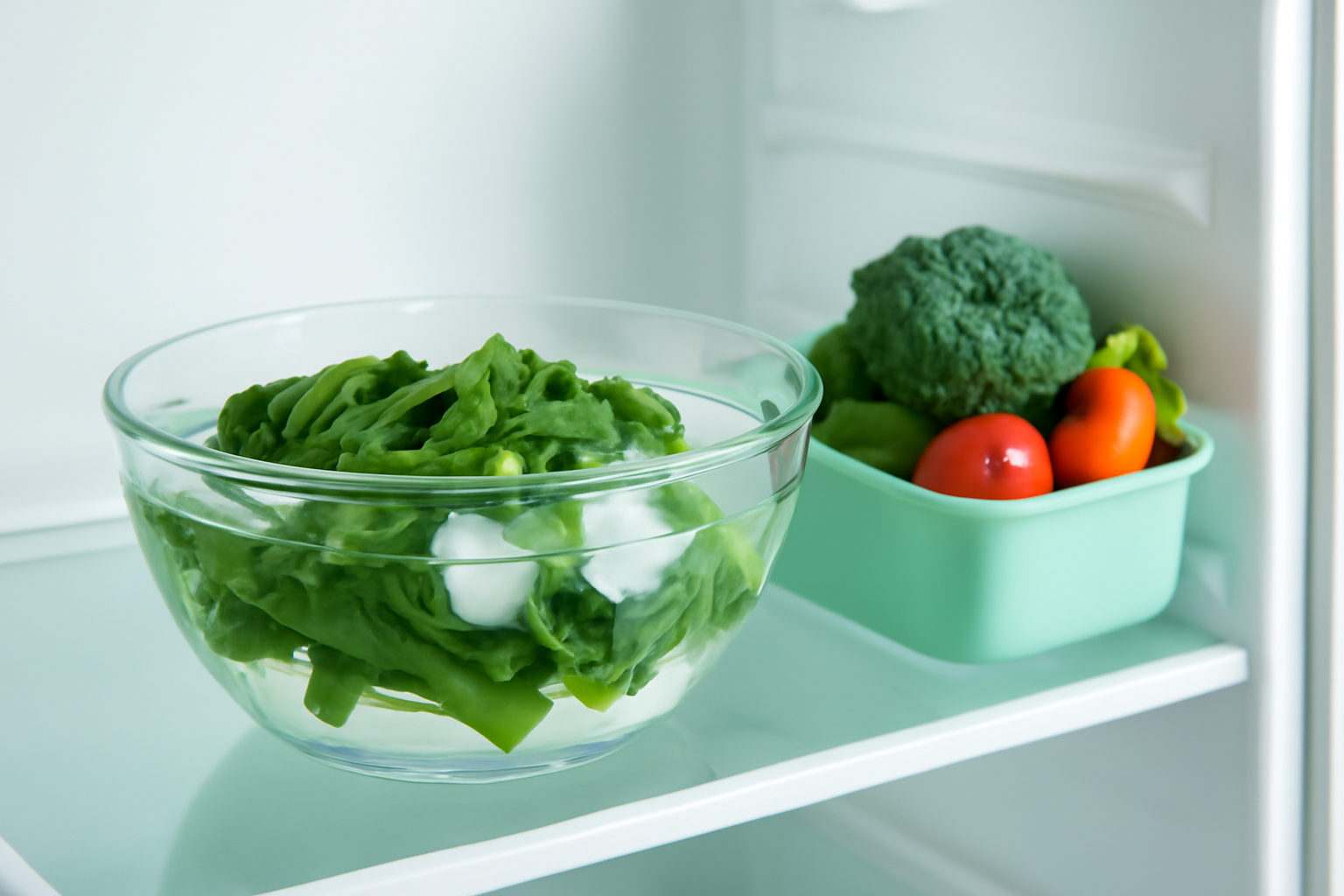
An ice water bath is a cold soak that lets dehydrated plant cells refill with water. This means you can rehydrate wilted greens, herbs, and celery with a bowl, some ice, and about 15 minutes of waiting. Follow these steps in order:
- Screen the produce first. Check that it passes the safety signs in the section on spoiled produce below. If it is slimy, moldy, or smells sour, skip the soak and toss it.
- Trim the ends. Cut about 1/2 inch off the stem end or cut base with a sharp knife. Fresh tissue drinks water far better than ends that have dried and sealed over.
- Fill a bowl with cold water and add a handful of ice. The ice keeps the water cold, and cold water is what coaxes the cells to take it in.
- Submerge the produce fully. For herbs, stand the stems in a glass of cold water like cut flowers instead.
- Check at intervals. Look after 10 minutes, then again every 5 to 10 minutes. Do not walk away for an hour.
- Lift out and dry well. Shake off the water, then pat dry with a clean towel or spin the greens in a salad spinner. Leftover water speeds up sliminess later.
- Store it right away. Put the produce in an airtight container or a lined crisper drawer with a dry paper towel to catch moisture.
One common assumption is that warm water works faster. It does not. A lukewarm soak does little to restore crispness and can encourage bacteria to grow. The opposite error causes trouble too. Soaking for hours turns some greens waterlogged and mushy, so keep the soak short.
Success looks like leaves that stand up on their own and celery that snaps instead of bends. If nothing has changed after 30 minutes, the produce is probably past the point where water helps.
How Long Does Each Type of Produce Take to Re-Crisp?
Re-crisping time depends on the produce type, because thin leaves rehydrate quickly and dense stalks need longer. Use these ranges as practical guidelines, not lab-tested figures. Results vary with how far gone the produce is.
| Produce | Best method | Typical soak time | Revival odds |
|---|---|---|---|
| Lettuce and romaine | Full ice water bath | 10 to 15 minutes | High |
| Spinach and kale | Full ice water bath | 10 to 20 minutes | High |
| Celery and carrots | Trim cut ends, soak in ice water | 30 to 60 minutes | Good |
| Parsley and cilantro | Stems in a glass of cold water | 15 to 30 minutes | High |
| Broccoli and asparagus | Trim ends, stand upright in water | 20 to 30 minutes | Good |
| Radishes and beet greens | Ice water bath | 15 to 30 minutes | Good |
What about limp celery? Trim the base, soak it in ice water, and test a stalk now and then. It is ready when a stalk snaps instead of bending.
Some produce does not come back. Anything slimy, mushy, or moldy is past saving. Delicate basil is a special case: it blackens and bruises in cold water instead of crisping, so it prefers room-temperature water (more on that in the next section). If your produce sits on the borderline, try the soak anyway, but expect that results vary and that older produce responds less.
Can You Revive Wilted Herbs, and Which Ones Won’t Come Back?
Hardy herbs recover from water loss well, while tender herbs like basil bruise in cold water. Sort your herbs into these groups before you start:
- Parsley, cilantro, dill, and mint can be revived. Trim the stems, stand them in a glass of cold water, and cover the leaves loosely with a bag. Their sturdy stems take up water quickly.
- Basil needs gentler handling. Stand it in room-temperature water on the counter and never put it in the fridge. Cold turns its leaves black.
- Herbs that have turned dark, slimy, or papery-dry from age rarely come back. Water restores moisture, not tissue that has already broken down or dried to a husk.
- Produce that was wilted and then frozen or otherwise damaged will not recover. Ice crystals ruptured the cells, so there is nothing left to refill.
There is a real limit to all of this. Revival restores water, not freshness lost to age, so flavor and nutrient quality may be slightly down. Use revived herbs soon. A revived bunch of hardy herbs is best used within a day or two. No precise shelf-life figure exists for revived produce, so treat that window as a sensible rule of thumb, not a guarantee.
One note on color. Ripening fruit gives off ethylene gas, and it can turn nearby leafy greens yellow. That yellowing is color loss, and no soak can fix it. Keep greens and herbs on a different shelf from your apples and bananas when you can, and store them in airtight containers as part of basic fridge organization. For the full story on which fruits do this, see our guide on ethylene gas produce spoilage.
Is Wilted Produce Still Safe to Eat?
Wilted produce is distinguished from spoiled food by texture, smell, and appearance. Wilting means water loss. Spoilage means the produce is breaking down. This table shows how to tell them apart.
| Check | Wilted but fine | Spoiled, discard |
|---|---|---|
| Texture | Limp or bendy, dry or evenly damp | Slimy film or mushy dark spots |
| Appearance | Color mostly intact | Visible mold, or yellowing and browning that spreads |
| Smell | Grassy, fresh, or neutral | Sour, musty, or rotten fridge odor |
The rule is plain: if it smells off or feels slimy, discard it. Soaking cannot make spoiled produce safe. Be aware that a look-and-smell check has limits, because it cannot detect every contaminant. Wash all produce before eating it, and throw out anything you doubt, especially if you are feeding young kids or anyone with a weakened immune system.
There is a fridge hygiene link here too. A quick weekly check of your crisper drawers catches wilting early, before it turns into rot. And if a rotten smell lingers near the drawers, a forgotten item or a spill may be the cause. That calls for deep cleaning, and our fridge cleaning routine covers a 15-minute reset that handles it.
The three clear discard signs to remember are slime, mold, and a sour or rotten smell. If you see any one of them, the produce goes in the trash, not the water bowl.
How Do You Keep Revived Produce Crisp After the Rescue?
Dry storage in airtight containers slows renewed moisture loss in revived produce. The hours right after the soak decide whether your effort lasts.
Start by drying the produce thoroughly. Wrap greens in a dry paper towel and seal them in an airtight container. Keep herbs standing in a jar of water, covered loosely. Then place everything in the crisper drawer, away from strong-smelling foods that could pass on their flavor.
One point of confusion is worth clearing up. A box of baking soda, or any fridge deodorizer, will not re-crisp or preserve produce. Fridge odor control and wilting are separate problems. If smell is your issue, we cover options in other guides, including our ozoori reviews breakdown of a rechargeable device and an older look at used coffee grounds fridge odor tricks. Neither one is a fix for limp lettuce.
Keep your fridge door in mind too. It is the warmest, most variable spot, which is why our piece on what to store in fridge door matters for produce planning. And if a power cut left your whole fridge in rough shape, read our notes on fridge smells after power outage before you start rescuing greens.
Finally, build one habit. Glance at your crisper drawers for 2 minutes once a week. Limp produce gets revived or used before it spoils, and you catch a problem before it becomes a smell. No hard numbers exist on how much this saves, but it costs almost nothing to try.
Frequently Asked Questions
Can you revive wilted lettuce that has turned slimy or brown?
Wilted lettuce that is only limp usually recovers in a cold water soak. Lettuce that feels slimy, smells sour, or has brown, mushy patches has started to rot, and no soak will fix that. Trim away the damaged leaves and compost them. Only the firm, still-green portions are worth saving.
Why does celery or another vegetable not crisp up after an ice bath?
An ice bath works by letting cells reabsorb water, so it helps produce that has lost moisture. It cannot repair produce that is old, frozen and thawed, or already breaking down. If celery stays rubbery after 30 minutes, it is probably too far gone to crisp, though it can still go into soup or stock.
How can you tell if wilted produce is safe to eat after reviving it?
Check for smell, texture, and color before eating. Safe wilted produce is limp but dry, with a fresh or neutral scent. Throw it out if you find slime, mold, a sour or musty odor, or dark soft spots. Reviving only restores crispness. It does not make spoiled produce safe.