This page contains affiliate links. We may earn a commission at no extra cost to you. Read our disclosure.
Before you set any gadget next to your kids’ yogurt and leftovers, ask whether fridge deodorizers are safe around food. No product page answers that for you, so you need four questions of your own.
Key Takeaways:
- Four questions cover the whole safety decision: what touches food, where it sits, what the paperwork says, and who can reach it.
- Three Ozoori specs are unpublished (dimensions, weight, battery capacity), so a buyer has to ask the seller before assuming anything about fit or heat.
- A 30-day money-back window gives you one month to check placement and fit in your own fridge, but it does not prove safety.
Is It Safe to Put a Deodorizer in the Fridge?
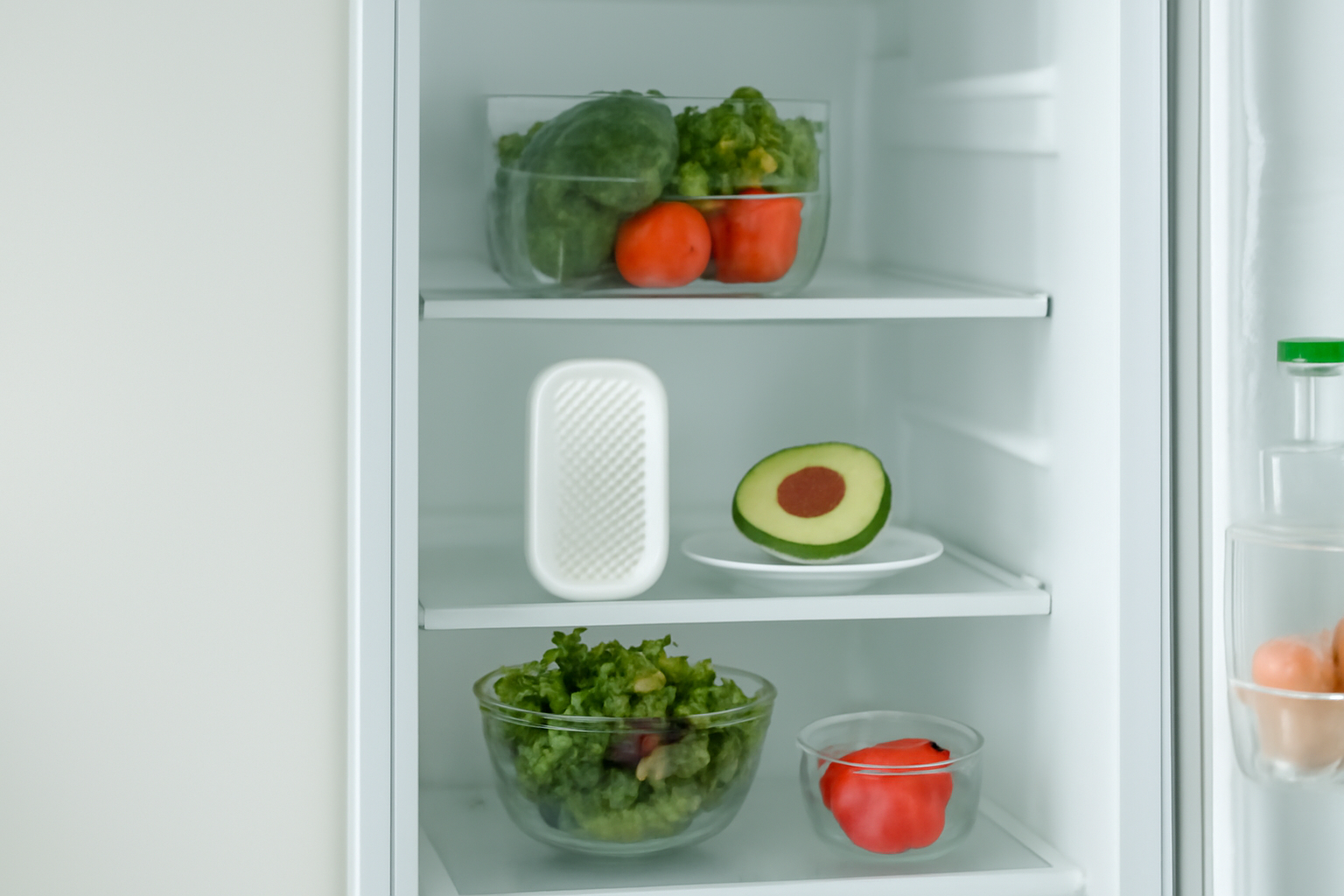
Fridge deodorizer safety is the question of whether a device is built, placed, and documented in a way that keeps it away from your food and your kids. This means the answer depends on the product and on your habits, not on a single yes or no. Three things decide it: whether the device touches food, where it sits, and what the maker puts in writing. If you are weighing up the Ozoori Fridge Deodorizer, read the verdict first.
Passive absorbers and electronic devices raise different questions. A box of baking soda is a powder that can spill. A rechargeable fridge deodorizer is a powered object with a battery and a charging port, so you worry about drips, handling, and fit instead. If you are weighing the two types, the guide on how do electronic fridge deodorizers work covers the mechanics in plain terms.
This section does not declare any product safe or unsafe. No safety figure for this product category appears in the information I have, so I won’t invent one. Here is a checklist of four questions instead. The gap between maker claims and independent testing runs through every one of them.
Do Electronic Fridge Purifiers Touch Food?
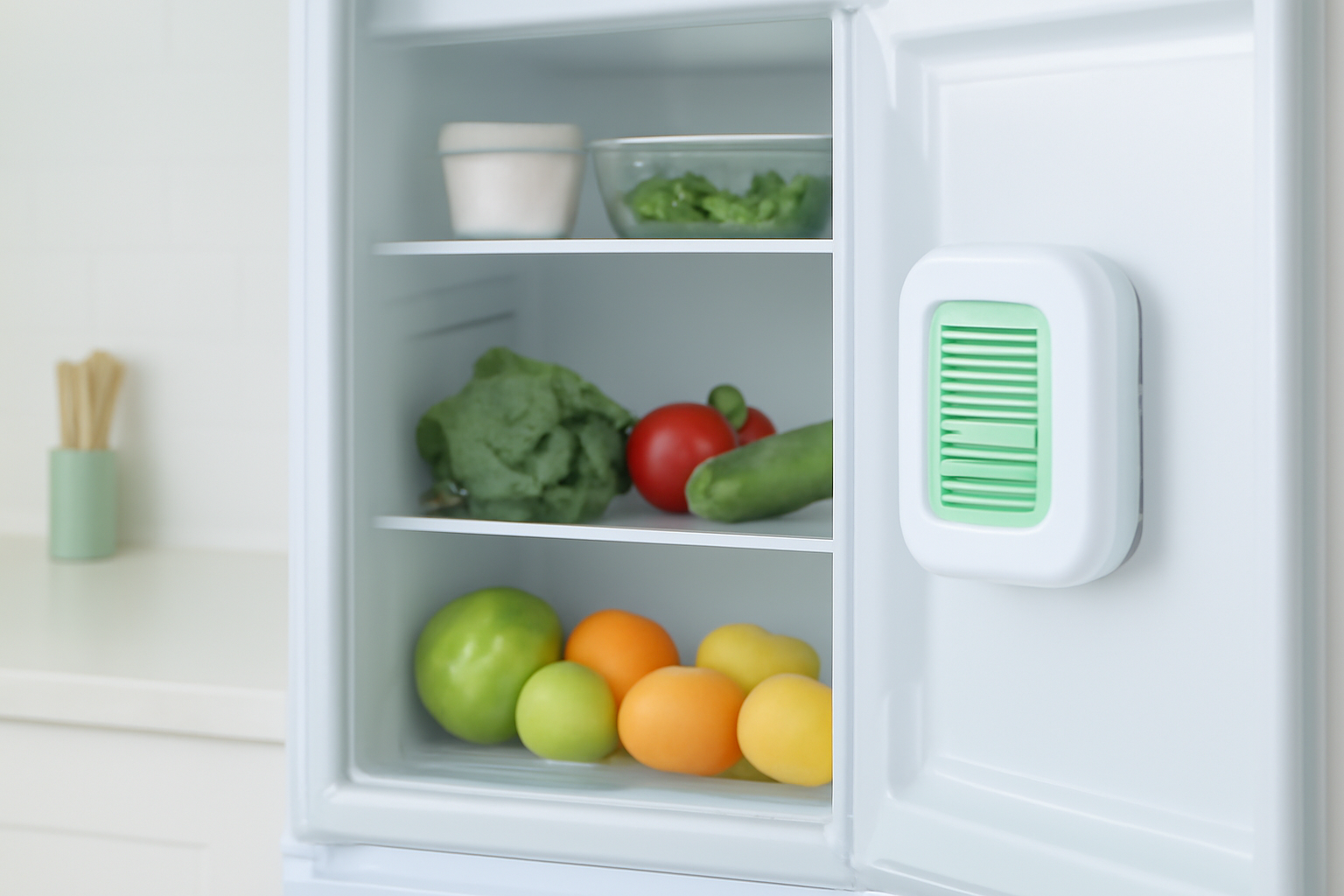
An electronic fridge purifier is meant to work as an ambient-use device, one that sits near food and acts on the air rather than going in or on the food. Contact use is the opposite: something you place directly on or in what you eat. Knowing which category a gadget falls into tells you what to ask next.
| Feature | Contact use | Ambient use |
|---|---|---|
| Where it goes | In or on food | On a shelf or in a door compartment |
| What it acts on | The food itself | Air in the fridge |
| Example | Produce-saver inserts | Cordless shelf devices |
| Main question | Is the material food-safe? | Is it kept clear of spills and handling? |
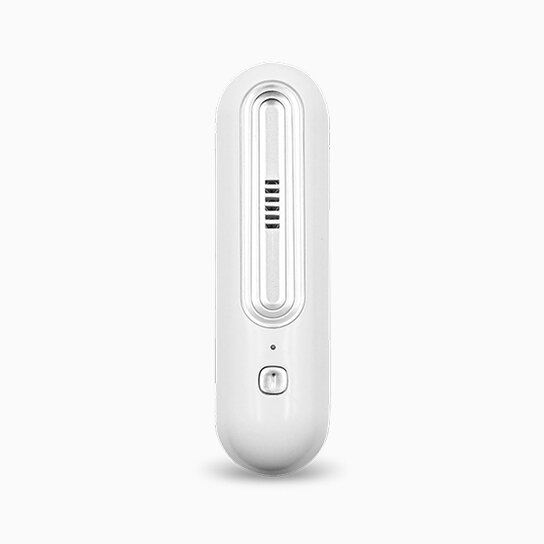
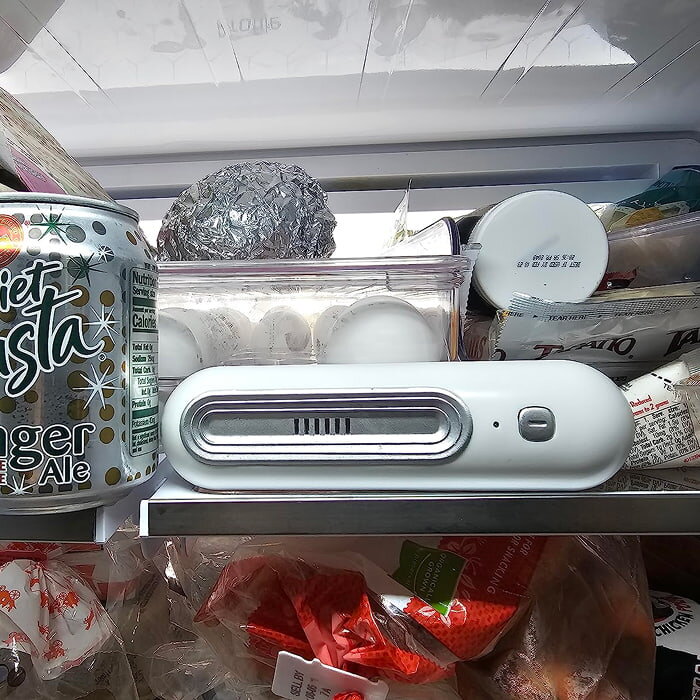
Per the maker, the Ozoori Fridge Deodorizer has a ceramic core with a photocatalytic element, sits on a shelf or in a door compartment, and has a filter-free design with 0 consumables or replacement parts. That points to ambient use. It describes the maker’s intended use, not independent proof of what happens inside your fridge.
No independent source I checked confirms food-contact or food-safe status. So don’t read “filter-free” as “safe.” It only tells you nothing needs replacing.
Where Should You Place a Deodorizer Near Open Food?
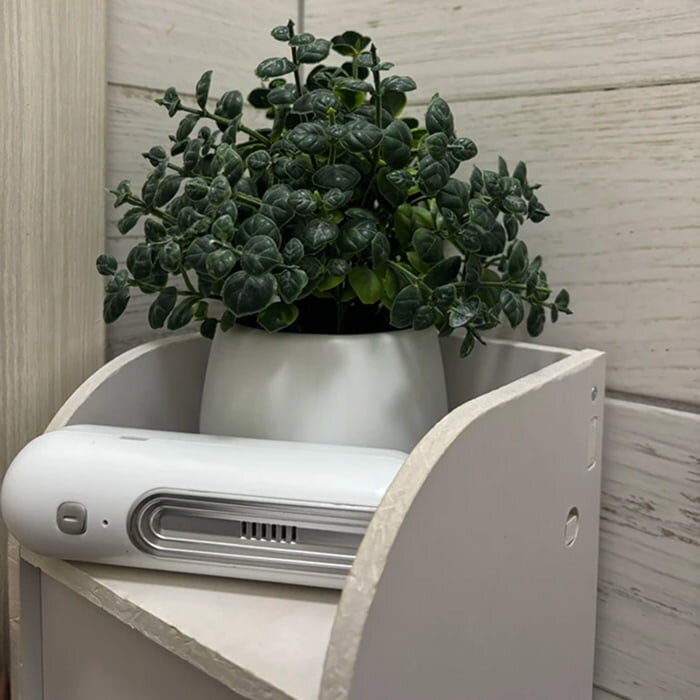
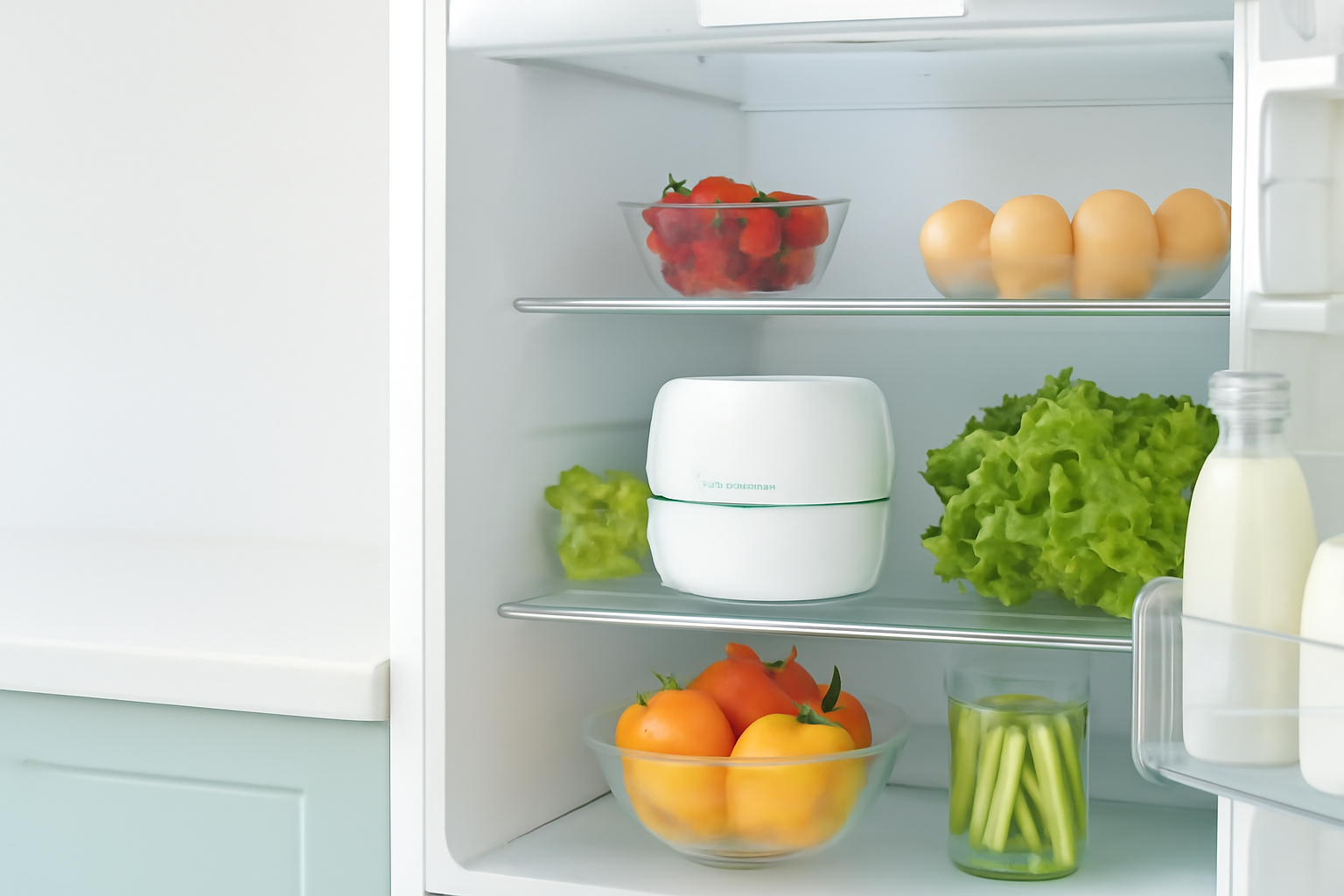
Placement away from open food reduces spill, splash, and direct-contact risk, and it costs nothing. These are ordinary hygiene habits, not maker requirements:
- Skip the shelf above and beside uncovered dishes. Drips travel down, and a device under an open bowl catches them.
- Pick a spot that stays dry. A shelf away from the condensation near the back wall or the crisper is a better bet.
- Keep the USB-C charging port and any cable clear of drips. Moisture and ports are a poor mix, so check the area each time you handle the device.
- Move it away from raw meat juices. Raw meat is the messiest thing in most fridges, so give it distance.
- Re-check the spot after each recharge. The maker says up to 4 weeks per charge, so the device comes out roughly once a month. Wipe the spot and the device then.
Boost Mode is meant for spills and strong smells, so the device may sit near a mess. Wipe the area first. Also remember that a lid or wrap on open food does more for fridge odor than any gadget placement. (In my kitchen, the leftovers I forgot to cover caused far more smell than anything on the shelf.) If you can’t find the source of a smell, the piece on why does my fridge smell lists causes parents often miss.
Is a Fridge Deodorizer Kid-Safe in a Door Compartment?
A door compartment exposes a small cordless device to child access and handling, which makes kid safety a placement question rather than a label question. A cordless device can be picked up, carried, and dropped. The shelf you choose decides how easily that happens.
| Location | Child reach | What to watch |
|---|---|---|
| Low door bin | Easy, small hands can grab it | Handling, dropping, and carrying it out of the fridge |
| High door shelf | Harder to reach | Door swings and jostling when the door shuts |
| Back of a middle shelf | Least reach | Airflow and fit, since the device needs room to sit |
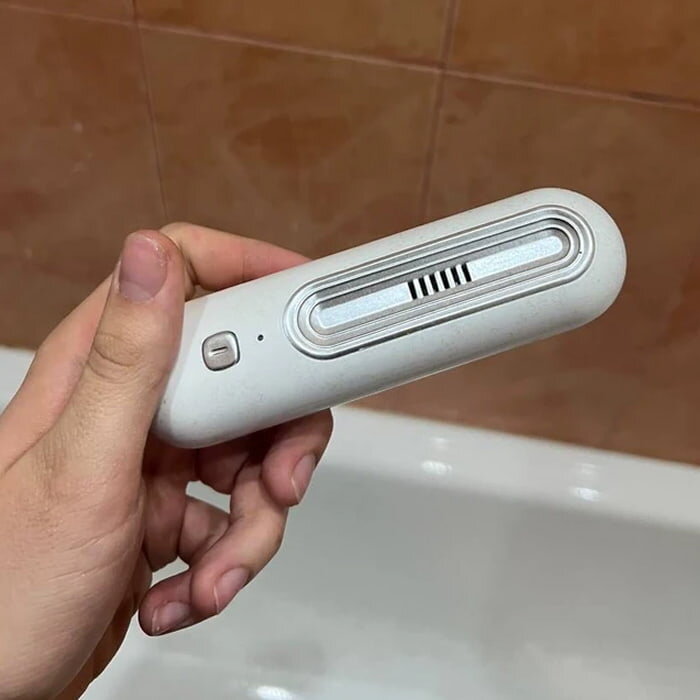
Dimensions and weight for the Ozoori are not published. That means you can’t tell in advance whether it is small enough for a toddler’s grip. The seller states a 30-day money-back guarantee, which lets you check fit at home. It is not a safety test, though.
If you have a toddler, choose a higher shelf over a door bin. For ideas on what else belongs in the door, see what to store in fridge door.
What Should You Check in the Documentation Before You Buy?
Product documentation answers what the seller will and will not commit to in writing. A missing spec is a question to ask, not a green light. Phrases like photocatalytic purification are maker claims, so treat them as claims until independent testing backs them up.
Ask the seller for these items in writing:
- Intended placement and food contact. Look for a clear statement on where the device goes and whether it may touch food.
- Dimensions, weight, battery capacity, and power draw. All four are unpublished for the Ozoori, so ask before you buy.
- Safety or compliance markings. Ask which ones the device carries and how to verify them.
- The return process under the 30-day money-back guarantee. Know who pays shipping and how long a refund takes.
- Support contact details. You want a person to reach if something looks wrong.
Independent feedback does not settle the question. Ozoori sits at 3.7 out of 5 from 140 Trustpilot reviews as of Oct 2026. Reviewers mostly praise the clear website and easy ordering, and few of them comment on odor results or safety. If you want to test results once it is in your fridge, how to tell if fridge deodorizer is working gives five simple home checks, and fridge deodorizer battery life covers the charging side. The full verdict is in the Ozoori reviews write-up.
Frequently Asked Questions
Can a fridge deodorizer sit on the same shelf as raw meat?
Raw meat juices are the main spill risk in a fridge, so keep any deodorizer off the shelf where meat is stored. Put the meat on the bottom shelf in a sealed container. The Ozoori is cordless and ceramic-core, but its dimensions and moisture tolerance are not published, so ask the seller before placing it near drips.
Does a USB-C rechargeable fridge deodorizer need to come out of the fridge to charge?
The maker describes USB-C charging at up to 4 weeks per charge, which implies taking the device out to plug it in. The brand information does not say whether it can charge in place. Confirm with the seller, and keep any cable away from damp surfaces.
What if my child grabs the deodorizer from the fridge door?
Move it to a higher or rear shelf out of easy reach, and keep it out of the lowest door bin. If it was already handled, wipe it down before returning it to the fridge. Contact the seller about anything unclear in the product documentation.