This page contains affiliate links. We may earn a commission at no extra cost to you. Read our disclosure.
A fridge deodorizer that needs charging roughly once a month swaps a cheap box of baking soda for a small recurring chore. That chore is the real ongoing cost, and it matters more than the sticker price once the novelty wears off.
Key Takeaways:
- The maker states up to 4 weeks per charge for the Ozoori Fridge Deodorizer, which works out to about 13 charges a year. That is a maker figure, not a measured result.
- The battery capacity is not published, so the 4-week claim cannot be checked against a milliamp-hour rating. The only way to know your own runtime is to log it for 2 to 3 cycles.
- A recurring phone reminder every 4 weeks, set when you first plug the device in, is the single habit that keeps an electronic deodorizer from quietly going dead.
How Long Does a Fridge Deodorizer Battery Last Per Charge?
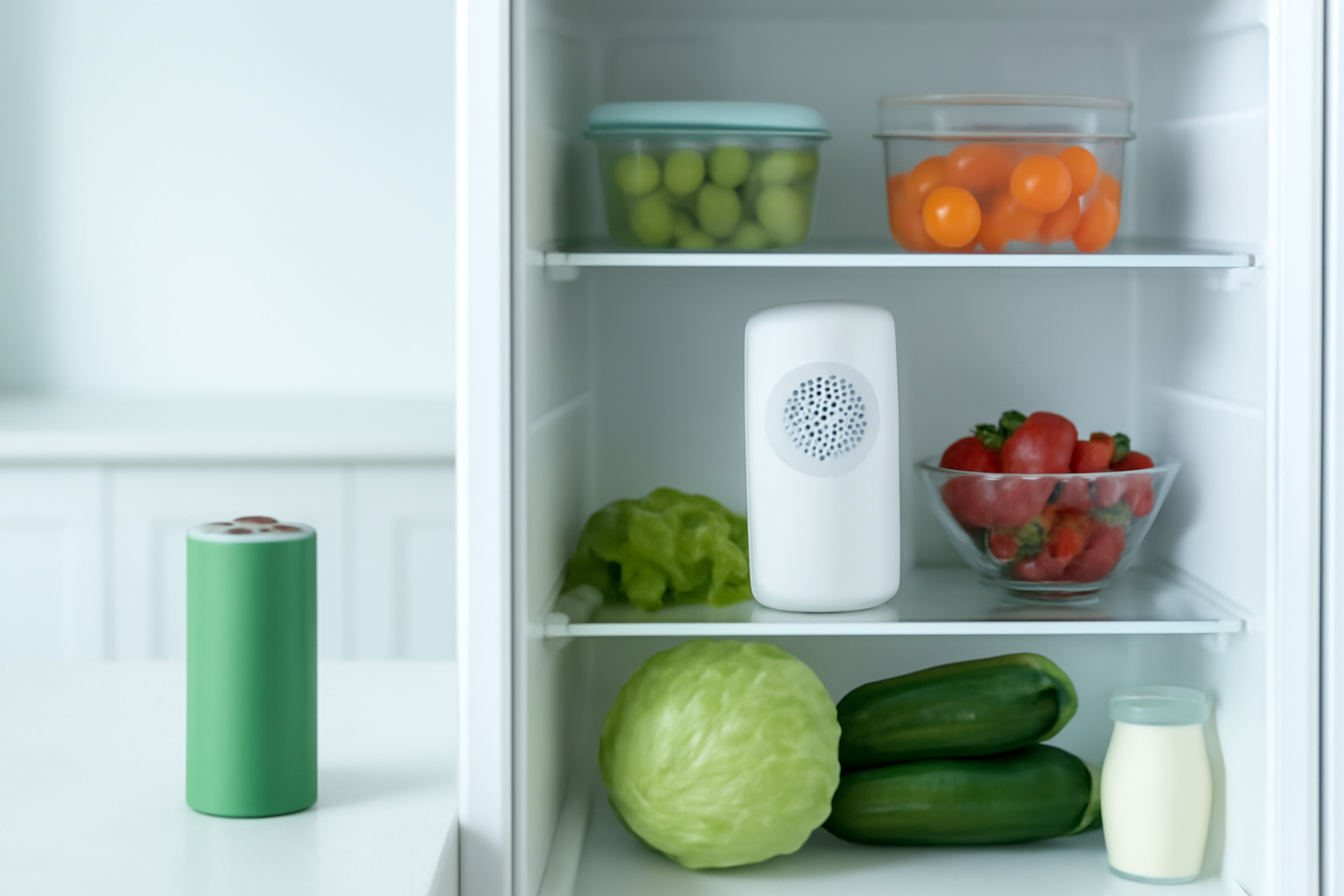
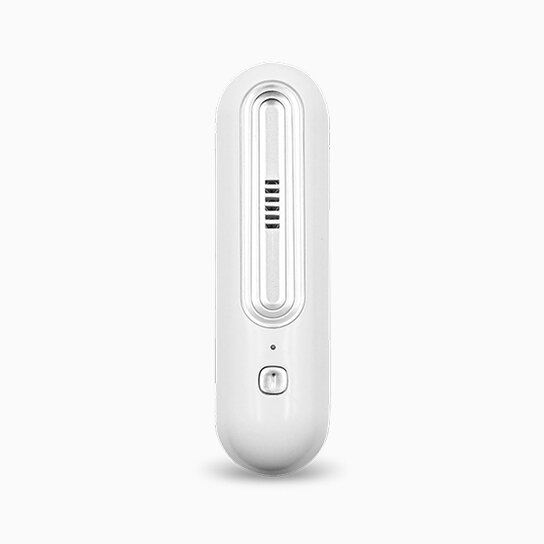
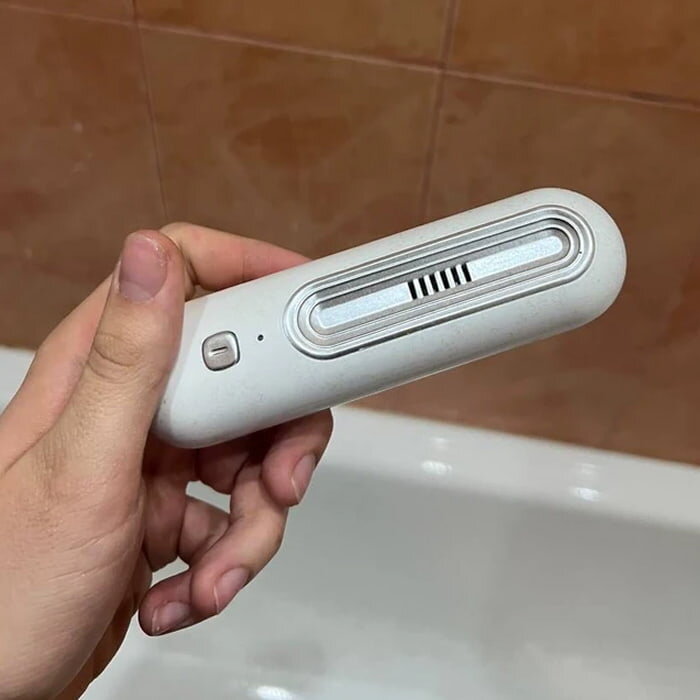
Fridge deodorizer battery life is the run time between full charges while the device sits on a shelf or in a door compartment. This means a longer figure gives you fewer chores, and a shorter one turns a set-and-forget gadget into a task you track. If you are weighing up the Ozoori Fridge Deodorizer, read the verdict first.
The maker of the Ozoori Fridge Deodorizer states up to 4 weeks per charge. Think of “up to” the way you think of a car’s advertised mileage: it describes a ceiling, not a promise. In practice, your fridge, your habits and your settings decide where you land.
I could not find any independent reviewer who measured runtime. The outside feedback I found, mostly on Trustpilot, covers the buying experience, not battery results. So the 4-week number is the maker’s claim, and nobody outside the company has confirmed it.
The device has two settings, Everyday Mode and Boost Mode. It is reasonable to expect Boost Mode to use more power, since it is meant for spills and strong smells. The maker does not publish the difference, so treat that as an expectation, not a confirmed fact. Heavy Boost use may shorten the gap between charges.
How Often Should You Charge a Fridge Deodorizer?
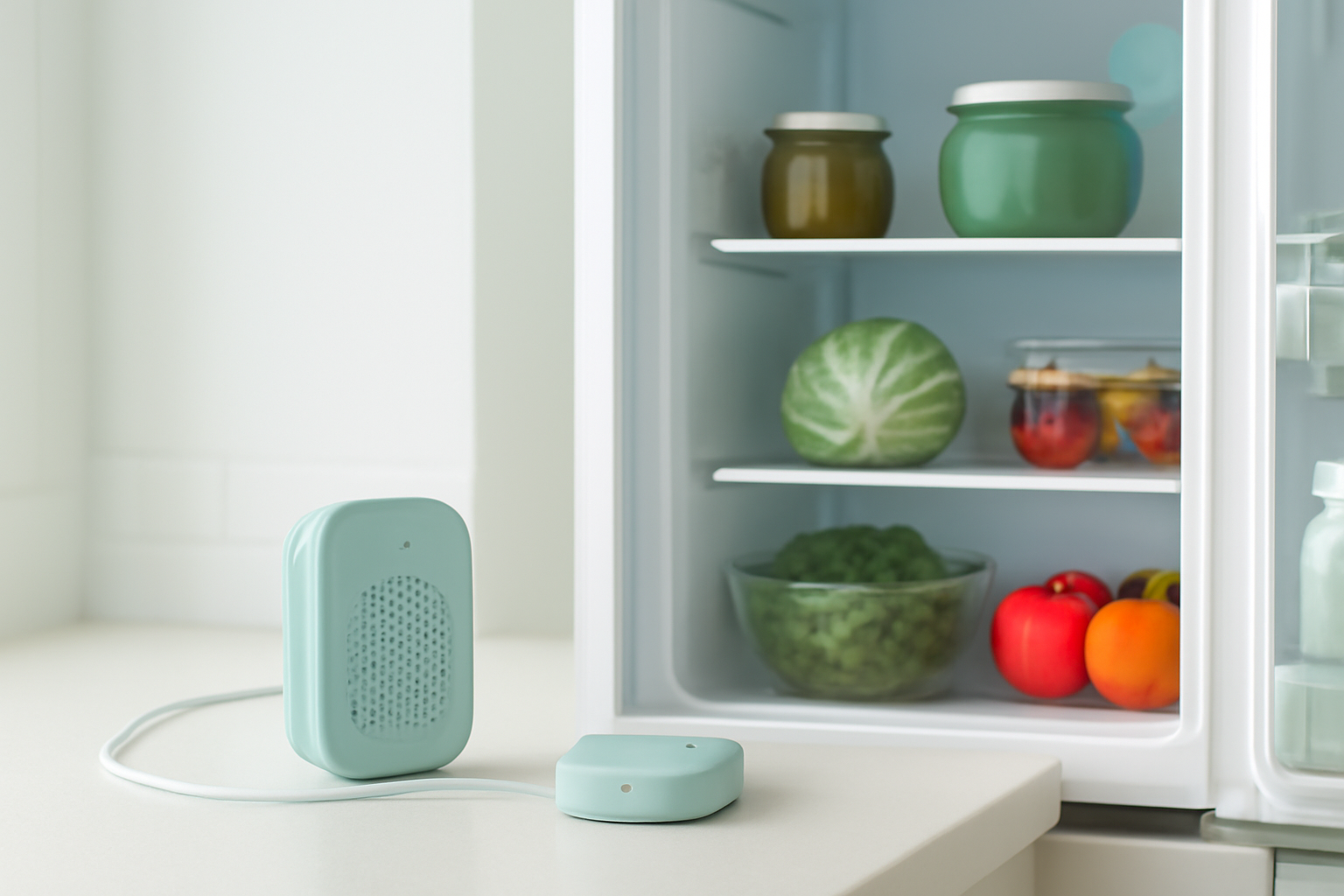
A rechargeable fridge deodorizer needs charging roughly once a month if the maker’s 4-week claim holds in your fridge. For a busy parent, the cost here is effort, not money. It is a small recurring task that competes with everything else on your list.
Here is a routine you can copy:
- Charge the unit fully the day it arrives, and write down the date.
- Set a repeating phone reminder for 4 weeks out, or a day or two earlier to leave slack.
- When the reminder fires, take the unit out and plug it into any USB-C cable and adapter you already own.
- Wipe the shelf spot while the unit is out, which makes a good moment for a quick check of whatever is causing fridge odor.
- Put the unit back and reset the reminder.
If the 4-week claim holds, that is roughly 13 charges a year (52 weeks divided by 4). The maker does not publish a charge time, so check the product page or manual before you plan around it. (I charge mine on the counter during Sunday meal prep, so the unit is never out of the fridge on a day I am running around.)
What Does USB-C Charging Mean for a Fridge Deodorizer?
USB-C charging lets a rechargeable fridge deodorizer use a cable most households already own. USB-C is the same port found on many modern phones and tablets, so you likely have a cable and adapter in a drawer right now.
Compare that with the alternatives. Passive absorbers have no battery at all. Other electronic devices need disposable cells or replacement filters, which adds a shopping chore. The Ozoori Fridge Deodorizer has a filter-free design, and the maker lists no consumables or replacement parts. That makes the battery the only recurring upkeep item, with a ceramic core inside that needs nothing from you.
One caution: the exact power draw, charging wattage and battery capacity are not published. Don’t assume a specific adapter spec beyond what the manual says. Then see the guide on how electronic fridge deodorizers work for the technology inside.
Does Cold Affect the Battery in a Fridge Deodorizer?
Cold temperatures can reduce the runtime of a rechargeable battery. Batteries lose some usable capacity when they chill, which is why your phone dies faster on a winter walk.
A fridge holds a steady cool temperature, so it is fair to ask whether the 4-week claim was measured in those conditions. The maker does not say whether its figure was tested at fridge temperature. Treat 4 weeks as unconfirmed for a cold shelf, and note that I have no percentage for how much runtime the cold might cost. Nobody has published one for this device.
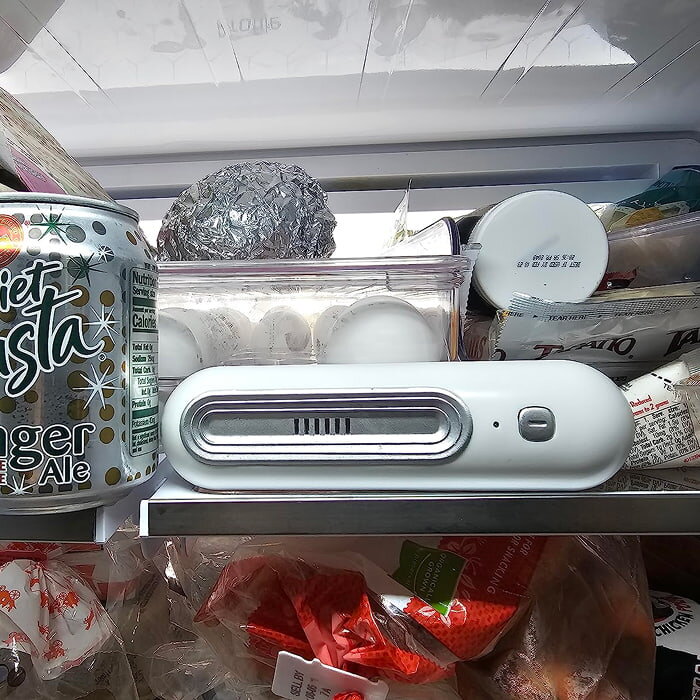
Here is a practical response. Place the unit in a door compartment, or on a shelf away from the coldest back wall, and watch your own results. If you are deciding what goes in that spot, the guide on what to store in fridge door covers which items belong there. Also keep the device in the fridge only. The product is described for fridge use, and I would not assume it works in a freezer.
What Happens If You Forget to Recharge It?
A forgotten recharge leaves the fridge with no active deodorizing until the battery is topped up. The maker does not publish how the device behaves as the battery runs low, so I can’t tell you whether performance fades or stops at once.
Here is how upkeep compares across the three common options:
| Upkeep task | How often | What happens if you skip it |
|---|---|---|
| Recharging a rechargeable deodorizer | About monthly, per the maker’s claim | The device stops running, and odors you would have noticed are no longer being worked on |
| Replacing a baking soda box | See the baking soda guide for the schedule | Absorption fades quietly, with no warning |
| Replacing a charcoal bag | See the charcoal guide for the schedule | Absorption fades quietly, with no warning |
A dead battery is at least a clear on/off state you can notice. A spent passive absorber gives no signal at all, so many people keep one in the fridge long past its useful life. The downside runs the other way: a missed charge means a gap in whatever benefit the device provides. I won’t claim the smell returns within a set number of days, because no one has measured it.
Is the Monthly Recharge Worth It Compared With a Passive Absorber?
Monthly recharging adds a small recurring effort cost that passive absorbers do not carry. Whether that is worth it depends on what you gain and what you give up.
What you gain:
- No consumables: The maker lists no filters or replacement parts, so there is no box or bag to remember to swap.
- One small device: It sits on a shelf or in a door compartment and stays there between charges.
What you give up:
- Regular recharging and a higher price: About 13 recharges a year if the 4-week claim holds, plus a $49 upfront price.
- Strong independent proof: Trustpilot shows 3.7 out of 5 from 140 reviews (as of Oct 2026), and those reviews focus on the buying experience, with little feedback on odor results. See my full Ozoori reviews write-up for the wider picture.
- Easy confirmation: Freshness gains are hard to measure at home, so you cannot easily check whether the effort is paying off.
My decision rule: the recharge routine suits you if you already live by phone reminders and want a set-and-forget feel between charges. It suits you less if you would rather toss in a cheap box and forget it. The odor-removal claims are the maker’s, and I have not proven them in my own kitchen.
Frequently Asked Questions
Does the Ozoori Fridge Deodorizer need a special charger?
The Ozoori Fridge Deodorizer charges over USB-C, so a standard USB-C cable and adapter should work. The maker does not publish charging wattage or charge time. Check the manual or product page for exact details before you buy a new adapter.
Can you use the Ozoori Fridge Deodorizer while it is charging?
The maker does not publish guidance on running the device while plugged in, so I can’t confirm it works that way. The safer routine is to pull it out of the fridge, charge it on the counter, then put it back on its shelf. Check the seller’s instructions for the official answer, and read the guide on whether fridge deodorizers are safe around food for related questions.
How do I know when the fridge deodorizer needs charging again?
The maker states up to 4 weeks per charge, but its product details list no low-battery indicator. The practical fix is a recurring phone reminder every 3 to 4 weeks, ideally on a fixed day like grocery shopping. Recharge on schedule instead of waiting for the unit to stop.
Will Boost Mode drain the battery faster than Everyday Mode?
The maker does not publish power draw or battery capacity, so there is no official figure comparing the two settings. Boost Mode is meant for spills and strong smells, so most people would use it only now and then. Heavy use could plausibly shorten the 4-week estimate, but that is untested.