This page contains affiliate links. We may earn a commission at no extra cost to you. Read our disclosure.
A refrigerator deodorizer can’t fix a fridge that smells because of what’s inside it. The right one can keep a clean fridge smelling neutral, and the sections below sort the useful options from the overhyped ones, including the ozoori fridge deodorizer review I put together.
Key Takeaways:
- Fridge odors come from five common sources (spoiled food, spills, the drip pan, door gaskets, strong leftovers), and a cleaning pass of roughly 30 minutes fixes most of them before any gadget is needed.
- Passive absorbers like baking soda and activated charcoal cost a few dollars per replacement, while the Ozoori Fridge Deodorizer costs $49 up front and needs a USB-C recharge about every 4 weeks, per the maker.
- Independent feedback on Ozoori is a 3.7 out of 5 from 140 Trustpilot reviews (Oct 2026), and it mostly covers the ordering experience, so no third-party data confirms odor results or longer-lasting food.
What Is a Refrigerator Deodorizer and How Does It Work?
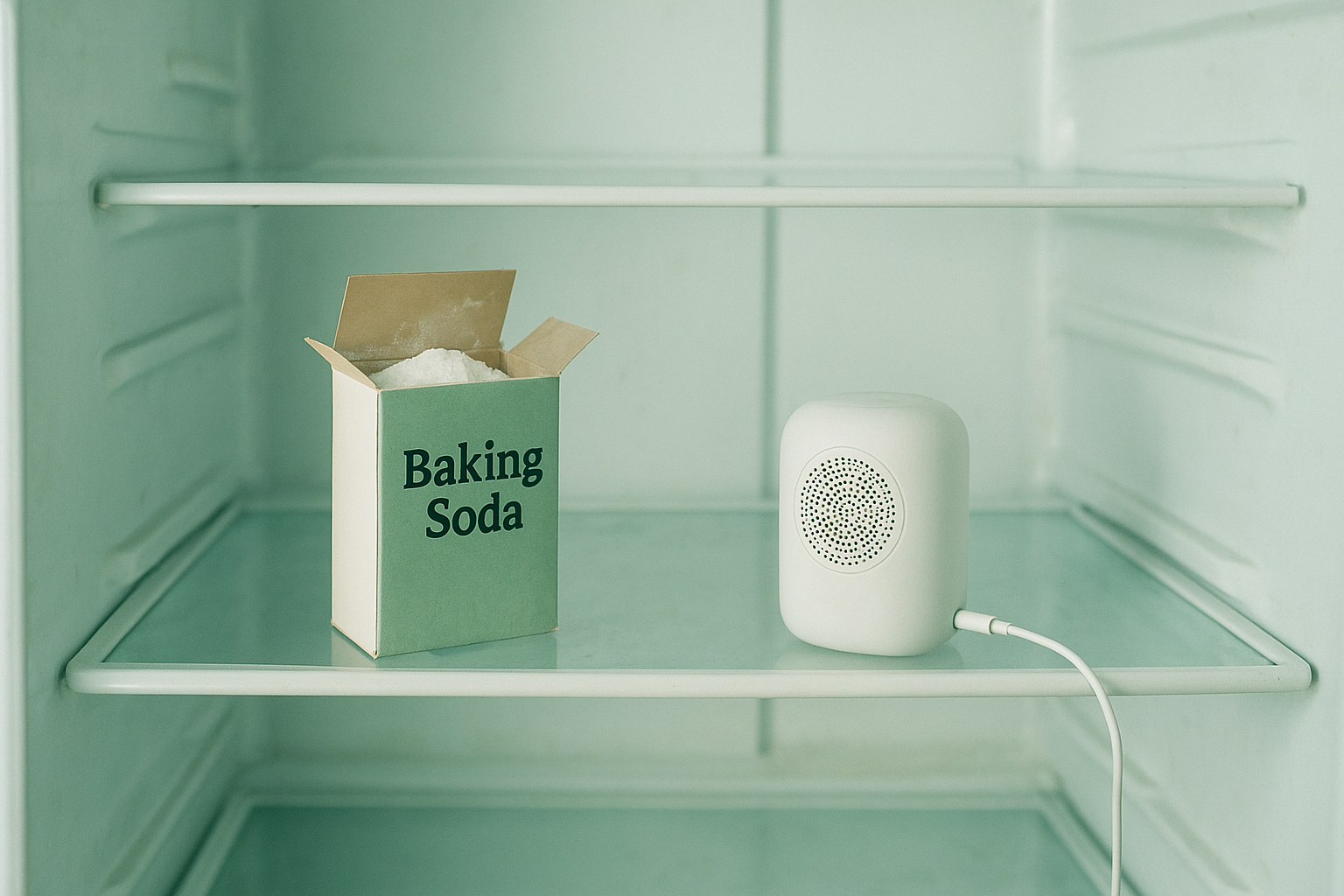
A refrigerator deodorizer is a product that reduces smells inside a fridge, either by absorbing odor molecules or, in electronic models, by running a purification element on a power source. This means it treats the air in the fridge, not the food or residue creating the smell. Think of a passive absorber as a sponge sitting on a shelf, and an electronic unit as a small appliance working on the air around it. In practice, a box of baking soda is the sponge, and a rechargeable fridge deodorizer is the appliance.
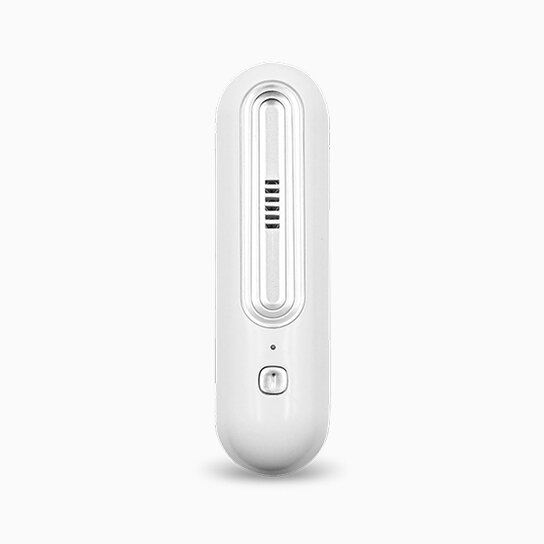
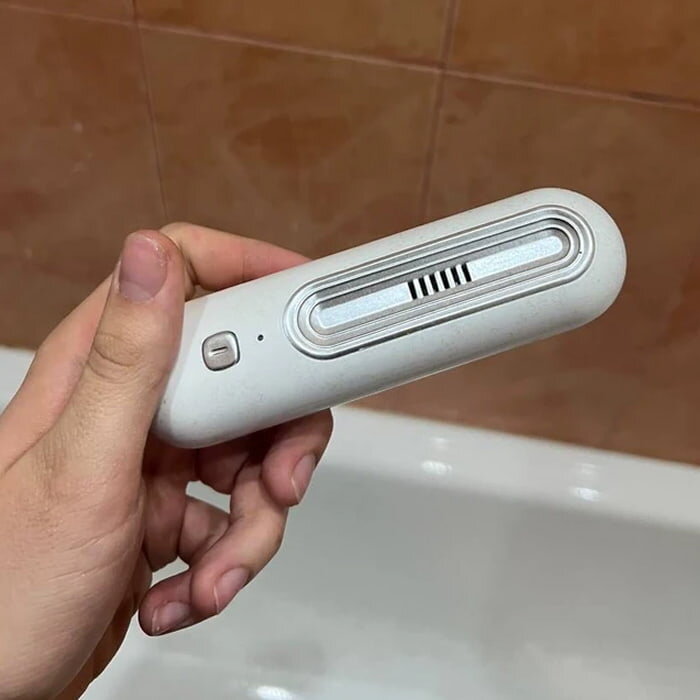
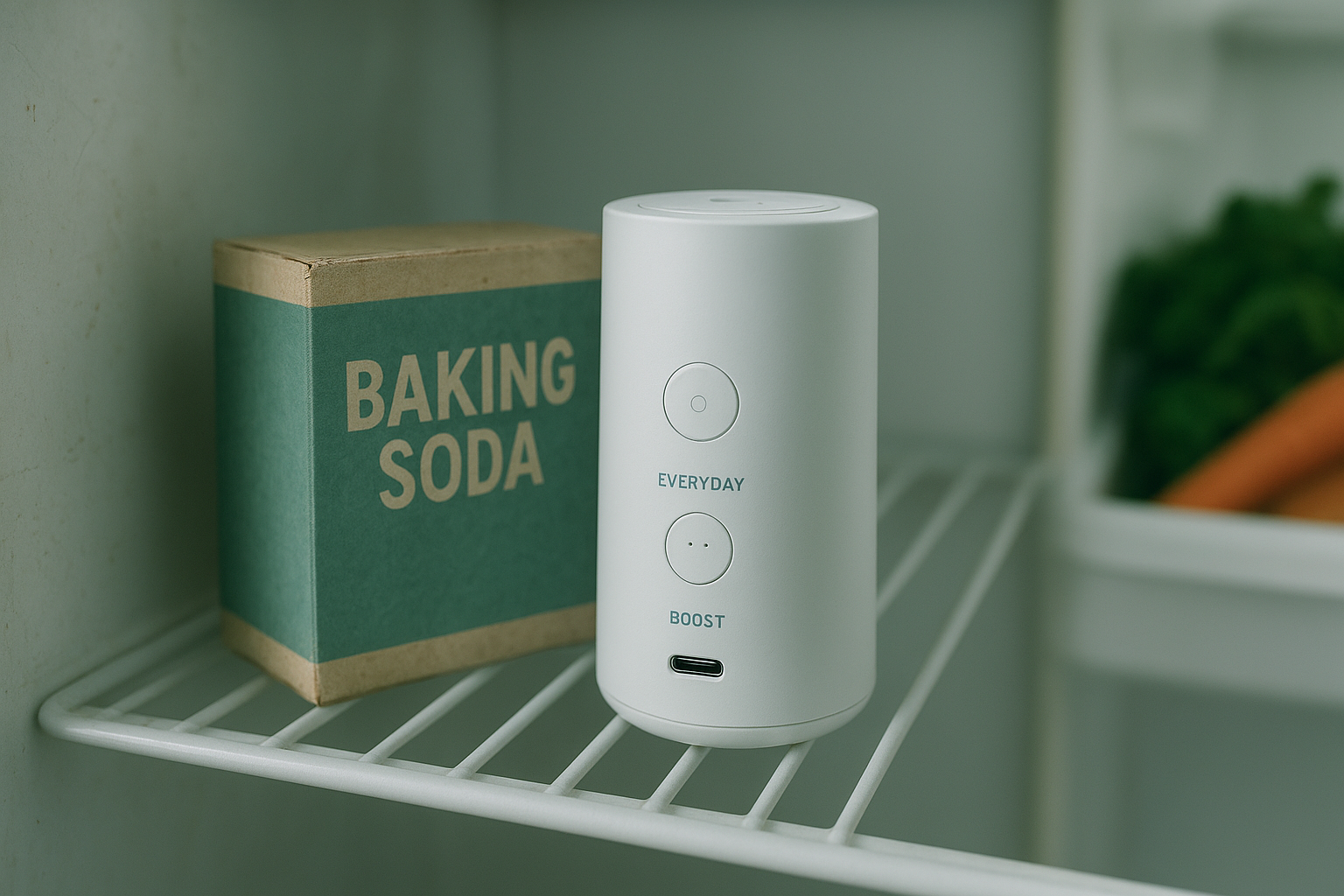
Passive absorbers such as baking soda and activated charcoal soak up odor molecules until they are saturated, then they stop helping and need replacing. Electronic deodorizers run on a charge, and their mechanism claims come from the maker, not from anything you can check at home. The Ozoori Fridge Deodorizer is a small cordless unit with a ceramic core. The maker describes it as using “OzoSonic” high-frequency purification with a photocatalytic element, and it is filter-free. Treat that description as the maker’s claim.
A common assumption is that a deodorizer removes the cause of a smell. It doesn’t, because the source is food or residue inside the fridge, and only cleaning removes that.
There are two broad types: passive absorbers and electronic units. Ozoori’s stated specs are two modes (Everyday and Boost) and USB-C charging with up to 4 weeks per charge, per the maker. Dimensions and power draw are not published.
How Do You Get Rid of Fridge Smell Before Buying Anything?
Cleaning removes the fridge odor sources that a deodorizer can only mask or slow. A full clean-out takes roughly 30 minutes (that’s my own practical estimate, not a measured study), and it is the cheapest fix and the one that matters most. Here is the order I follow:
- Empty the fridge and toss anything spoiled or past its date.
- Wash the shelves and drawers with warm, soapy water.
- Wipe up spills and clean the folds of the door gasket, where residue hides.
- Clear the drip pan or drain area if your model has an accessible one (check the manual first).
- Wipe the interior with a baking soda and water solution.
- Put food back in sealed containers so strong smells stay contained.
Those steps map to the five common odor sources: spoiled food, spills, the drip pan, door gaskets, and strong-smelling leftovers. Each step targets one of them, which is why a deodorizer placed in a dirty fridge disappoints.
Storage matters too. Some fruits give off ethylene gas, which speeds ripening and spoilage of nearby vegetables. Keeping apples and similar fruit apart from leafy greens cuts down on waste, and spoiled produce is a smell source of its own.
If the smell returns within a few days after a deep clean, a hidden source is the likely cause. Look behind drawers, under shelf supports, and inside the drain channel before you spend money on anything.
Refrigerator Deodorizer vs Baking Soda: What’s the Real Difference?
Baking soda and activated charcoal absorb odor molecules passively until they are saturated, while a rechargeable deodorizer works from a power source. That difference changes how much you spend, what you maintain, and what you can check yourself.
| Feature | Baking soda | Activated charcoal | Rechargeable electronic (Ozoori as the example) |
|---|---|---|---|
| How it works | Absorbs odor molecules passively | Absorbs odor molecules passively | Runs on a charge; maker describes high-frequency purification with a photocatalytic element |
| Upfront cost | A few dollars per box | Varies by store | $49 one-time |
| Ongoing cost | Replace the box regularly | Replace the pouch or insert | USB-C charge, no consumables per the maker |
| Maintenance | Swap the box | Swap the insert | Recharge about every 4 weeks (maker’s figure) |
| What you can verify at home | Whether the fridge smells better to you | Whether the fridge smells better to you | The same, since the mechanism claims are the maker’s |
| Main weakness | Modest absorber that fills up | Similar in type, also saturates | Higher cost, monthly recharging, little independent result data |
The cost logic is simple. Passive options mean small recurring purchases. The device means $49 once plus a USB-C charge. The break-even point depends on how often you would replace boxes, so run your own math using what you pay at your store. I’m not giving a baking soda price because it varies too much.
Baking soda is a modest absorber that works best when the fridge is already clean, and charcoal is similar in type. I can’t tell you the device beats either passive option, or the reverse. No head-to-head test data exists, and I won’t invent a winner.
Do Fridge Deodorizers Actually Work?
Passive absorbers work modestly on mild odors in a clean fridge, and no deodorizer fixes a spoiled-food source. Home testing can’t confirm shelf-life gains or precise odor reduction, because smell is subjective. You can notice whether your fridge smells better over a week. You can’t measure whether strawberries last longer because of one change, since temperature, how often you open the door, and how fresh the produce was at purchase all move the result.
That matters for the Ozoori refrigerator, because the freshness claims on the seller’s page are the maker’s. I can’t measure them in my kitchen, and I won’t pretend otherwise.
The independent picture is thin. Ozoori holds 3.7 out of 5 from 140 Trustpilot reviews as of Oct 2026. Most reviewers describe themselves as somewhat happy, and they praise the easy website, smooth ordering, and clear product information. There is little third-party feedback on odor removal or food lasting longer. A 3.7 also means a meaningful share of mixed or unhappy reviews sit alongside the positive ones. If you search for ozoori refrigerator reviews, expect most of what you find to cover shopping, not results.
Here is a simple way to test any option yourself. Clean the fridge first and note how it smells. Then add one change at a time, whether that is a baking soda box, a charcoal insert, or a device, and wait a week before judging. Changing three things at once tells you nothing.
Is a Rechargeable Fridge Deodorizer Worth It?
The Ozoori Fridge Deodorizer suits households that want a reusable, no-refill device and accept a higher upfront cost plus monthly recharging. The ozoori refrigerator deodorizer has trade-offs, and these are the factors I weigh:
- Upfront cost: The price is $49 once, versus small recurring box purchases. Whether that pays off depends on how often you would replace baking soda.
- Maintenance: You recharge roughly every 4 weeks (maker’s figure) instead of replacing boxes. Forgetting to charge it is the same kind of chore as forgetting to swap a box.
- No consumables: The maker says it is filter-free with no replacement parts, so there is nothing to reorder.
- Verification gap: No independent data confirms odor results, so you are trusting the maker’s description and your own nose.
- Return window: The seller states a 30-day money-back guarantee, which lowers the risk of testing it in your own fridge.
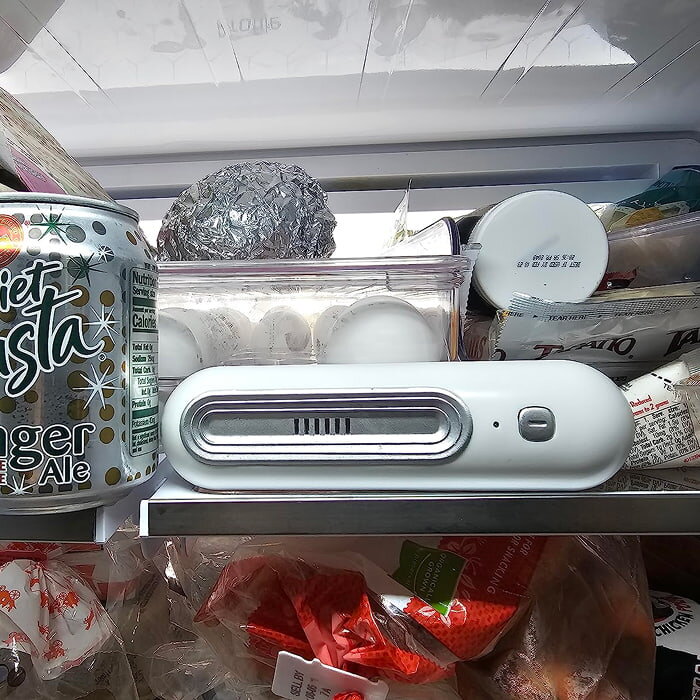
- Unpublished specs: Size, weight and battery capacity are not published, which matters if your fridge shelves are crowded.
It fits the set-and-forget parent who keeps forgetting to replace boxes and accepts the cost. Skip it if your fridge has an unfixed source smell, or if you would rather spend nothing at all.
If it sounds like a fit, you can check today’s price on the seller’s site. This page contains affiliate links. We may earn a commission at no extra cost to you.
What’s the Best Refrigerator Deodorizer for Your Situation?
The best choice depends on your household, because no independent head-to-head ranking exists. Matching the deodorizer type to your habits determines whether the cost and upkeep pay off. This table is my judgment based on trade-offs, not a tested ranking.
| Situation | Pick | Why | Watch out for |
|---|---|---|---|
| Tight budget, clean fridge | Baking soda | Lowest cost, easy to find | Needs regular replacing |
| Want a passive option with a stronger reputation for absorbing | Activated charcoal | Passive like baking soda, no power needed | Also saturates over time |
| Forget replacements, willing to pay more | Rechargeable (such as Ozoori) | Reusable, no refills, $49 once | Monthly recharging, no independent odor data |
| Recurring smell from a hidden source | None of the above yet | Find and remove the source first | Gadgets only mask it |
Cleaning and storage habits matter more than the gadget. Sealed containers, separating ethylene-producing fruit from vegetables, and a weekly clear-out of leftovers do more than any device. The decision rule is one line: fix the source, then choose the lowest-effort option you will actually maintain.
Frequently Asked Questions
How often should I clean my fridge to keep odors from coming back?
Wipe spills as they happen and do a full shelf-and-drawer wash about once a month. Check for expired items weekly, since a forgotten container is the most common smell source. A deodorizer only masks or reduces odor in the air, so it cannot replace removing the cause.
Can I use a refrigerator deodorizer and baking soda together?
Yes, nothing about the two conflicts. Baking soda absorbs odor passively and costs a few dollars, while a rechargeable unit works on its own power. Many households keep a box on a back shelf and add a device only if smells persist. Neither is proven to extend food freshness.
What should I check before buying a rechargeable fridge deodorizer?
Look for a stated charge time and runtime, a return window, and published size so it fits your shelf. Read independent reviews about odor results, not just shipping. Ozoori, for example, states up to 4 weeks per charge and a 30-day guarantee, but its freshness claims are the maker’s own.