This page contains affiliate links. We may earn a commission at no extra cost to you. Read our disclosure.
Choosing between a passive and a rechargeable fridge deodorizer comes down to one question. A passive absorber costs a few dollars and needs swapping often, while a rechargeable one costs more once and needs a USB cable every few weeks. Which chore would you rather own?
Key Takeaways:
- The two types trade differently: passive absorbers (baking soda, activated charcoal, coffee grounds) cost little upfront and need replacing on a schedule, while a rechargeable fridge deodorizer such as the Ozoori costs $49 once and swaps the replacement schedule for a charging schedule of up to 4 weeks per charge.
- Neither type can be proven at home without lab gear. The only check a parent can run is the nose test, repeated over the same 2 to 4 weeks, with the fridge cleaned first so the result isn’t muddied.
- Ozoori’s Trustpilot score is 3.7 out of 5 from 140 reviews, and those reviews mostly praise the ordering experience rather than measured freshness, so the freshness claims remain the maker’s own.
What Are the Two Deodorizer Types, and How Do They Differ?
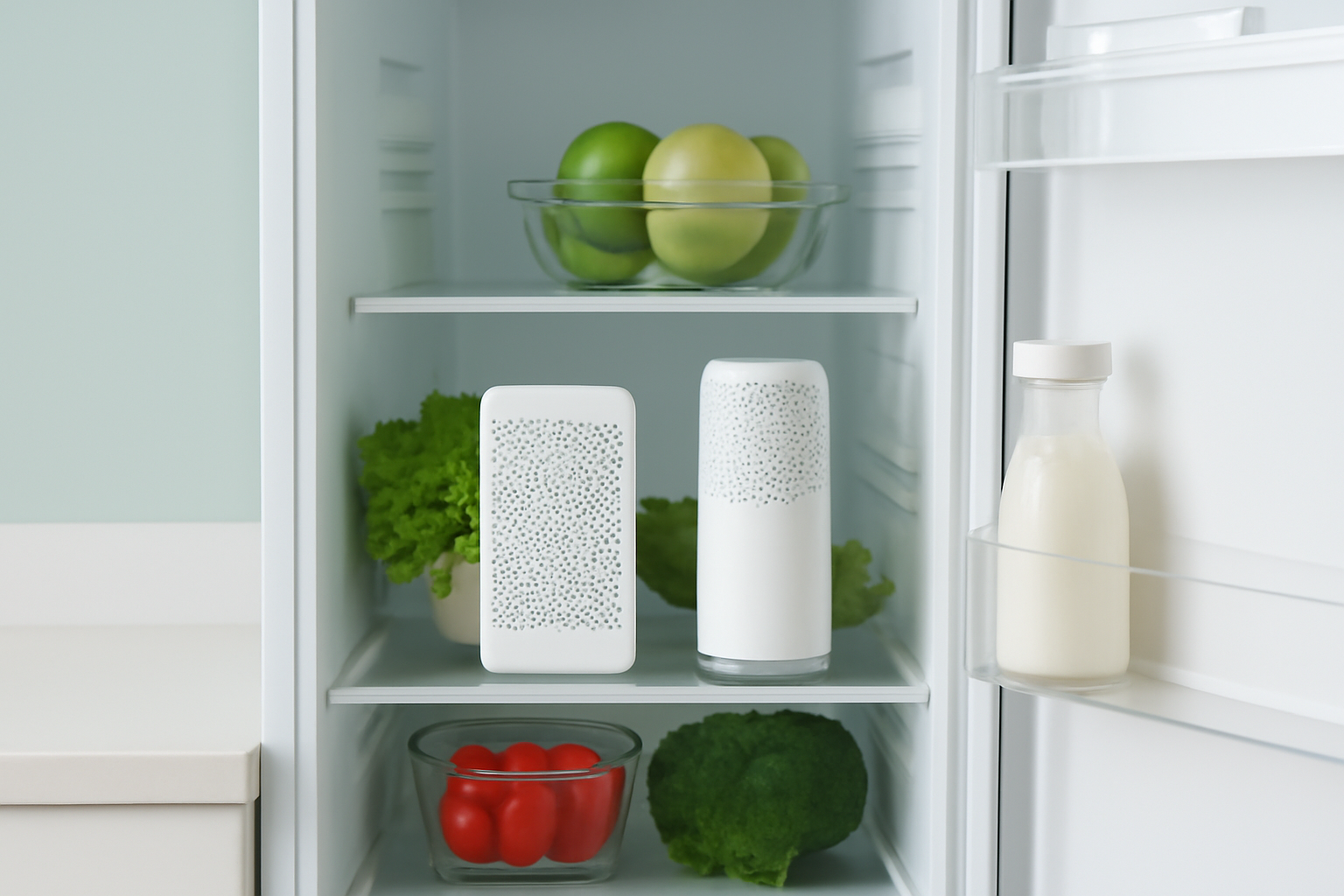
Passive absorbers are materials that sit in the fridge and trap odor molecules until the material is full. This means they work only as long as they have room left. Think of a sponge: it soaks up spills until it is saturated, and then you wring it out or replace it. Baking soda, activated charcoal and coffee grounds all work this way. If you want the details on the most common one, our look at whether baking soda absorbs fridge odors covers what a box can and can’t do. If you are weighing up the Ozoori Fridge Deodorizer, read the verdict first.
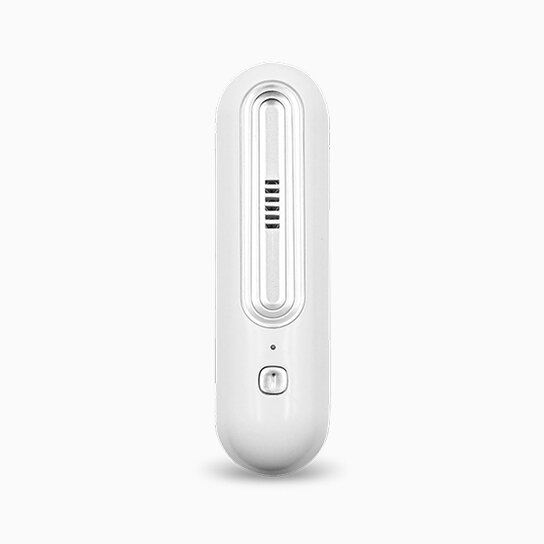
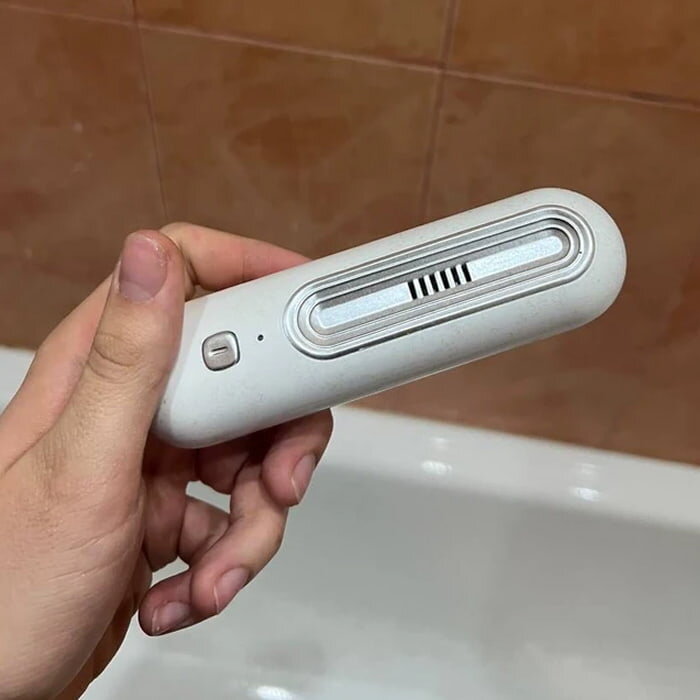
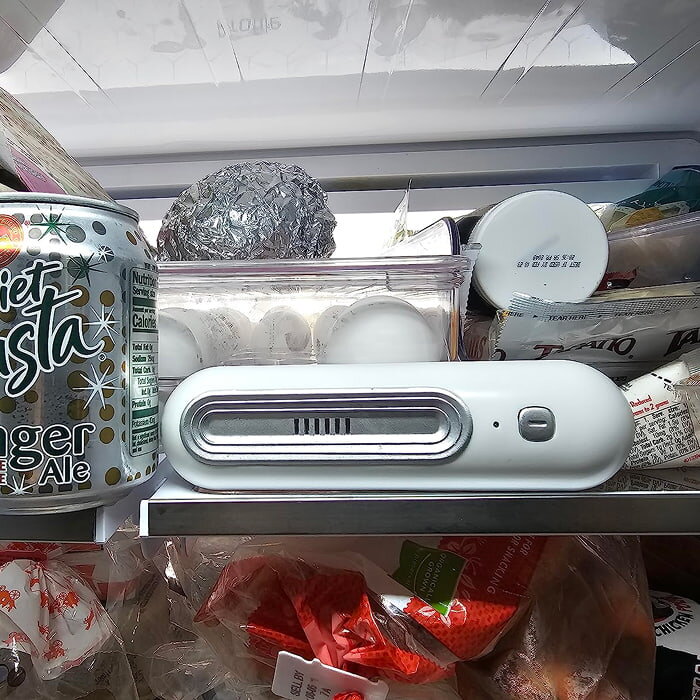
A rechargeable fridge deodorizer is a powered gadget that runs on a battery and has no material that fills up. The Ozoori Fridge Deodorizer is one example. It has a ceramic core, and the maker describes its “OzoSonic” high-frequency purification with a photocatalytic element as the way it works. That description comes from the seller, and this comparison cannot verify it. The device charges over USB-C, offers Everyday and Boost settings, and has no filters or replacement parts.
So the real difference is what runs out: the absorber’s material, or the device’s battery. This comparison looks at the two categories. The full product breakdown lives in our Ozoori reviews.
Passive vs Rechargeable: How Do They Compare Side by Side?
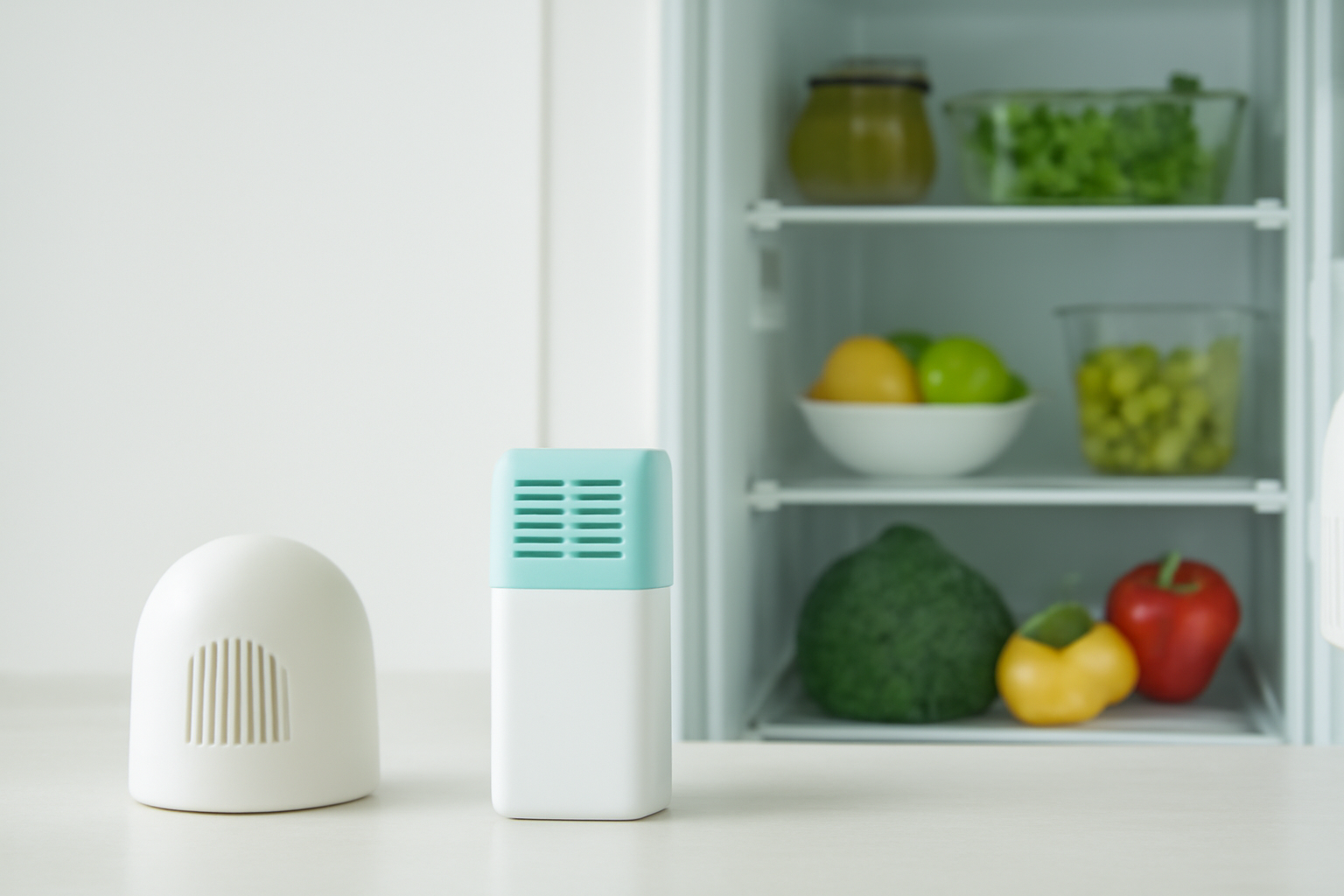
The table below lines up the two types on the points that shape daily life with each one. Cells stay qualitative except where the maker or the price gives a figure.
| Feature | Passive absorbers | Rechargeable fridge deodorizer |
|---|---|---|
| Upfront cost | Low | Higher ($49 for the Ozoori) |
| Ongoing cost | Recurring, every time you replace it | Close to none beyond a cable and a little electricity |
| What you do to maintain it | Buy and swap the material | Recharge over USB-C, up to 4 weeks per charge per the maker |
| What runs out | The absorbing material | The battery charge |
| Effort level | A reminder to replace, then a trip to the store | A reminder to plug in |
| Consumables | Yes, always | None stated by the maker |
| Ease of seeing it is working | Easy to see the material, hard to see the effect | No visible change, effect judged by smell alone |
| Handling of heavy odors | Fills up fast against strong smells | Boost Mode is the maker’s answer, with no independent result to cite |
Passive absorbers cost little each time, but they never stop asking for a swap. A rechargeable fridge deodorizer costs more once and trades a replacement schedule for a charging schedule. If you tend to forget to buy a new box, that trade can matter more than the price tag.
What Does Each Type Cost Over One Year?
Cost per month depends on how often you replace the passive absorber, so the fairest approach is to run your own numbers. No passive prices are quoted here because boxes and bags vary by brand and store. Work through it like this:
- Take the price of one box or bag of baking soda or charcoal that you actually buy.
- Multiply it by how many swaps you would do in 12 months if you followed the package advice.
- Compare that total with the device’s one-time $49, plus a few minutes of charging every few weeks.
- Check the break-even point: passive wins if you swap rarely, and the device wins only if you would otherwise swap often.
A device with no consumables has an ongoing cost close to zero apart from the cable and a little electricity. The maker does not publish its power draw, so I can’t put a figure on that electricity. The device comes out ahead only for households that do replace passive absorbers on schedule.
Do Fridge Deodorizers Work, and Can You Tell at Home?
A common assumption is that a fresher-smelling fridge means longer-lasting food. The reality is that smell and spoilage are related but separate, because a deodorizer is aimed at odor, not at what is happening inside your strawberries. A nose test measures smell, so home testing cannot confirm that food lasts longer. For the produce side of that story, see our guide to ethylene gas and produce spoilage.
Passive absorbers have a familiar mechanism, surface trapping, that you can reason about without instruments. The Ozoori’s mechanism is described by the maker and is hard to check without lab tools. In my own kitchen I can tell you whether the fridge smells better. I can’t tell you what happens to bacteria or shelf life, and I won’t pretend otherwise.
Here is a fair home test. Clean the fridge first. Note the smell for a week. Add one device and note it again over 2 to 4 weeks, changing only one thing at a time.
Independent feedback is thin on the results side. Ozoori holds 3.7 out of 5 on Trustpilot from 140 reviews (as of Oct 2026), and reviewers mostly talk about easy ordering and clear product information. Few cover odor removal or food shelf life. A 3.7 score also means a real share of reviewers were mixed or unhappy. The seller’s own 30-day money-back guarantee gives you a practical way to run the test.
Are Electric Fridge Deodorizers Worth It for Heavy Odors and Busy Households?
A rechargeable fridge deodorizer suits households that want set-and-forget upkeep and accept a higher upfront price. A passive absorber suits the parent who wants the lowest cost, doesn’t mind a reminder to swap, and deals with a mild or occasional smell. Think of it as choosing which chore to own: the shopping trip or the charging cable.
Heavy odors change the picture. A fridge with a strong, constant smell usually has a source, such as a spill, a forgotten container or a drip under a shelf, and no deodorizer of either type replaces finding and cleaning it. Our guide to why a fridge smells walks through the usual culprits. The Ozoori’s Boost Mode is the maker’s answer to spills and strong smells, but none of the independent reviews I found test it, so I can’t tell you it works.
The trade-offs are plain. You pay $49 up front, you recharge roughly monthly (up to 4 weeks per charge, per the maker), and the freshness claims stay unproven. If you also wonder whether these gadgets are safe around food, we cover that in are fridge deodorizers safe around food. When you are ready to weigh the Ozoori against your own habits, the review and comparison guide is the next stop.
Frequently Asked Questions
Do rechargeable fridge deodorizers need any refills or filters?
The maker describes the Ozoori as filter-free with no consumables or replacement parts, so the ongoing task is recharging over USB-C rather than buying refills. The stated charge lasts up to 4 weeks, though battery capacity and power draw are not published.
Which type is the better first step if my fridge smells but I have not cleaned it yet?
Clean the fridge first, whichever type you choose. A deodorizer of any kind works on lingering smell and cannot remove the spill or spoiled item causing it. Once the source is gone, a passive absorber is the cheaper way to see how much smell is left.
Can I use a passive absorber and a rechargeable deodorizer together?
Nothing stops you from using both, but doing so makes it harder to tell which one is helping. If you want a clear read on a new device, change one thing at a time and give it 2 to 4 weeks before judging.